Entry-Level Cybersecurity Certification UK: Which to Start?
Choosing your first cybersecurity certification
If you are searching for an entry-level cybersecurity certification UK employers will recognise, the confusing part is rarely the idea of studying. It is deciding which certification actually suits your background. Some options are broad and vendor-neutral, some are tied to Microsoft environments, and some are better as a confidence-building first step than a direct route into more technical security work.
This article is designed to help you compare the realistic starting points for UK beginners and career changers. Rather than giving you a generic list of popular names, it looks at what each option is like to study, how difficult it feels when you are new, which roles it supports, and what it naturally leads on to next.
By the end, you should be clearer on whether you need a gentle introduction, a stronger all-round foundation, or a certification that fits a specific cloud or workplace technology path. That makes it easier to choose a route that matches your current level and your career goal, instead of picking the most familiar name and hoping it fits.
How to choose your first certification sensibly
Start with the role you want
Your first certification should point towards a realistic next step. If you are aiming for a junior security role, a broad security foundation usually makes more sense than a narrow vendor exam.
Be honest about your baseline
A true beginner often benefits from a lower-pressure exam that builds vocabulary and confidence first. If you already have IT support, networking or systems experience, you may be ready for a broader and more demanding certification.
Think beyond the first badge
A useful first cert should not be the end of the path. It should help you move into labs, practical study, and a clearer second step such as a security operations, cloud security or Microsoft pathway.
Practical takeaway: the right first certification is not always the most famous one. It is the one that matches your current knowledge, the kind of work you want to move towards, and the amount of structure you need to stay consistent.
Comparing entry-level cybersecurity certification UK options
| Certification | Best fit | Difficulty for beginners | Study focus | Good next step |
|---|---|---|---|---|
| ISC2 Certified in Cybersecurity | Career changers with little or no security background | Lower to moderate | Core security principles, access control, risk and network basics | Security+, SSCP or hands-on SOC preparation |
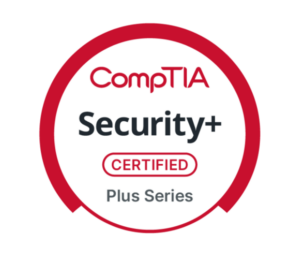
| CompTIA Security+ | Learners who want a broad, widely recognised starting point | Moderate | Threats, architecture, operations, identity, governance and practical terminology | CySA+, vendor security paths or junior security role preparation |
| Microsoft SC-900 | Learners targeting Microsoft 365, Azure and identity-focused environments | Lower to moderate | Security, compliance, identity and Microsoft security concepts | SC-200, SC-300 or Azure-focused training |
| Cisco CCST Cybersecurity | Beginners who want an accessible operational starting point | Lower | Security operations basics, monitoring, incidents and networking awareness | Security+ or a Cisco-led security route |
Decision shortcut: if you want the strongest broad foundation for a junior cyber path, Security+ is often the better long-term starting point. If you need a gentler first step, ISC2 Certified in Cybersecurity or Cisco CCST Cybersecurity can be easier ways to build confidence before moving on. If your direction is clearly Microsoft-based, SC-900 is usually the more relevant first move.
Which certification fits your starting point?
ISC2 Certified in Cybersecurity
Best for: career changers and complete beginners who want a recognised first security credential
Pace: manageable if you need time to absorb unfamiliar terms
Pathway fit: strong stepping stone into broader security study
This is a sensible starting point if cybersecurity feels new and you want a certification that introduces the language of the field without expecting deep technical experience from day one. It helps you build confidence around core concepts such as access control, risk and security principles.
The trade-off is that it is more of a starting line than a finish line. On its own, it may not show the same depth as Security+, so it works best when followed by practical labs, further study and a clearer next certification.
CompTIA Security+
Best for: learners who want a broad first cyber certification with good long-term value
Pace: better suited to those with some IT support, networking or self-study background
Pathway fit: useful for junior security, support and infrastructure routes
Security+ is often the most practical answer for people who want one first certification that covers a wide spread of security topics and is recognised across many IT environments. In UK job descriptions, it is a familiar benchmark because it signals that you understand core security concepts across systems, networks and operations.
The trade-off is difficulty. For a true beginner, it can feel like a big jump if you do not yet understand basic networking, operating systems or troubleshooting. If that sounds like you, Security+ may still be the right destination, but not always the right first step.
Microsoft SC-900
Best for: learners heading towards Microsoft 365, Azure or identity-related security work
Pace: approachable for beginners, especially if you already use Microsoft tools
Pathway fit: strongest when followed by deeper Microsoft security training
SC-900 is a good choice if your career goal sits inside Microsoft environments rather than general cybersecurity. It introduces security, compliance and identity concepts in a way that makes sense for organisations using Microsoft services heavily.
The main limitation is breadth. It is useful, but it is not the same as a broad entry certification for cybersecurity as a whole. If you want flexibility across different role types, you may eventually need a wider security foundation alongside it.
Cisco CCST Cybersecurity
Best for: beginners who want an accessible first exam with an operations flavour
Pace: lower pressure than broader mid-entry certifications
Pathway fit: useful as an early step before deeper security study
Cisco CCST Cybersecurity can suit learners who want a practical introduction to security operations concepts without jumping straight into a broader exam. It can help make topics such as monitoring, incidents and basic security workflows feel less abstract.
The trade-off is that it is not usually the first certification people mention when comparing entry routes, so you should choose it for fit rather than name recognition. It works well as a confidence-building move, especially if you plan to progress to Security+ or another broader certification afterwards.
Common mistakes when choosing a first cyber cert
- Choosing the certification with the loudest online hype instead of the one that fits your role goal
- Confusing a course completion certificate with a recognised certification exam
- Jumping into a broad exam before learning basic networking, operating systems and security vocabulary
- Assuming a vendor-specific certification covers the whole cybersecurity field
- Studying only theory without adding labs, scenarios or practical exercises
Keep in mind: your first certification should help you move forward, not prove everything at once. A smaller first win followed by steady practical learning is often more effective than choosing an exam that leaves you stuck or discouraged.
Final advice for choosing your first cyber cert
If you are completely new and want the gentlest recognised starting point, ISC2 Certified in Cybersecurity is often a sensible place to begin. If you already have some IT grounding and want a broader credential with strong long-term value, CompTIA Security+ is usually the more career-focused choice. If your path is clearly tied to Microsoft environments, SC-900 is the better fit. If you want an accessible operations-led introduction, Cisco CCST Cybersecurity can be a useful early step.
The best choice depends less on popularity and more on fit. Pick the route that matches your current level, the type of role you want next and the kind of study support you need to stay consistent. Book a free consultation to get personalised advice on the right IT course or career path for your goals.
Turn what you just learned into a real IT career move
Whether you want to build job-ready skills, follow a structured career path, or get expert advice before choosing a course, Codionix IT Training UK can help you move forward with confidence.
Explore IT Courses
Browse instructor-led training across cloud, cybersecurity, networking, data, support, digital skills, and more.
View CoursesView Career Paths
See structured pathways designed to help you progress toward roles like helpdesk technician, network engineer, ethical hacker, and beyond.
Explore Career PathsBook Free Consultation
Not sure which course or path fits you best? Speak with the team and get clear, practical guidance before you commit.
Get Free AdviceRelated articles

UK Holiday Phishing Patterns: 30-Day Anti-Phish Plan
Uncover UK-specific holiday phishing patterns from Black Friday to Boxing Day. Start a practical 30-day anti-phish plan with mailbox rules and hands-on labs to boost detection.

Incident Response Playbook: NCSC Guidance & NIST CSF 2.0
Build a practical incident response playbook aligned with NCSC guidance and NIST CSF 2.0. Includes ready-to-use templates and hands-on labs to practice IR workflows.

Build a Home SOC Lab in the UK for Under £25/Month
A practical, UK-friendly guide to building a budget home SOC lab over a weekend. It includes UK-friendly free cloud tiers, prebuilt log sources, and tasks aligned to junior SOC roles.
Free IT Training Consultation
Use the calendar to book your free one-to-one course advice session with a Codionix IT training expert. Get personalized career guidance to help you choose the best online IT course in the UK for your goals. We’re happy to answer any questions you may have and help you determine which of our training programs best fit your needs.
How it works?
You schedule a call at your convenience
We do a free discovery and consulting meeting
We guide you towards the best career path for you
Your benefits:
- Personal Guidance
- Course Clarity
- Career Focus
- Honest Advice
- Stress-Free
- Clear Direction
Find us on:
Schedule a Free Consultation

Not sure which IT course is right for you? Book a free consultation and get expert guidance from our team — no cost, no pressure.